Aggregate Dynamics in a Large Virtual Economy: Prices and Real Activity in Team Fortress 2

Economics
Using a nearly complete record of transactions from Team Fortress 2, this paper constructs prices and macroeconomic indicators for a large virtual economy built around decentralized barter. It shows how certain goods emerged as currencies, identifies price rigidities created by competing forms of money, and documents speculative bubbles following announcements by the game’s designers.
Author

Curtis Kephart

Published

May 20, 2016


Written with Matt Baumer

Abstract: Virtual economies are growing as internet technology continues to advance. We analyze a large and complete set of transaction data from the Team Fortress 2 virtual economy, which was designed to allow decentralized barter as the sole exchange institution. A small subset of goods emerges endogenously to act as media of exchange. Taking one of these money goods as numeraire, we generate daily prices for thousands of goods. We then generate macroeconomic indicators, including nominal growth and inflation. We find evidence of a particular sort of nominal rigidity related to the circulation of multiple types of currency goods, and also find some localized asset price bubbles associated with announcements by the game designers.

Download PDF


Some interesting figures

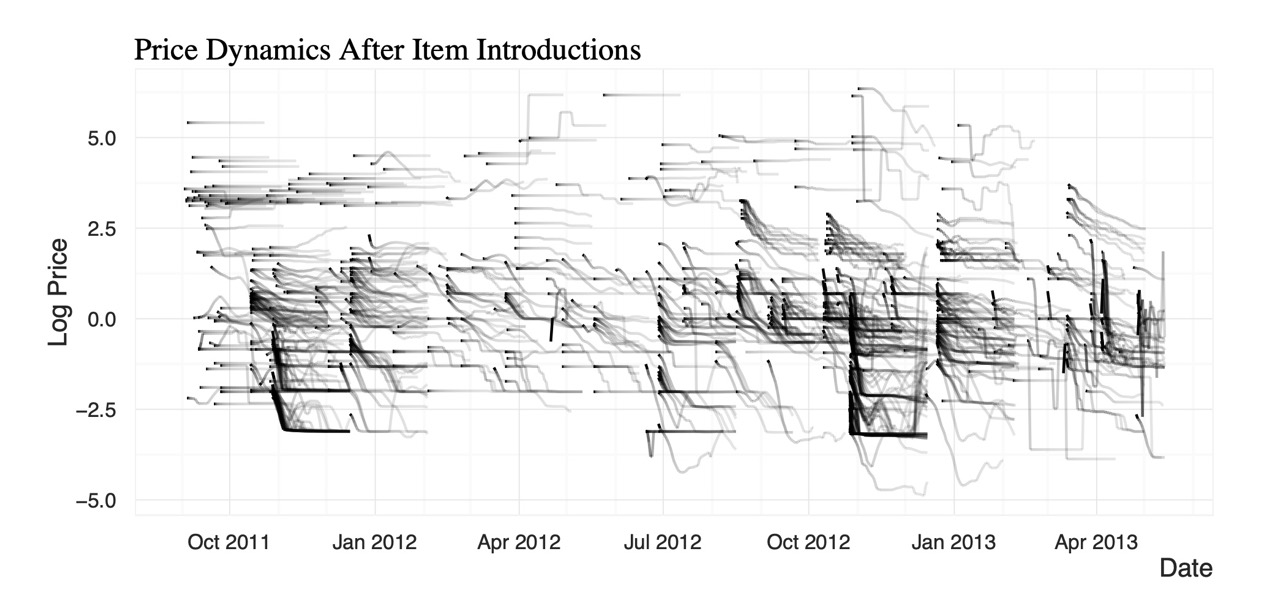
Figure 5: New item price time series. Note: Each sparkline represents an item’s price over its first fifty days.

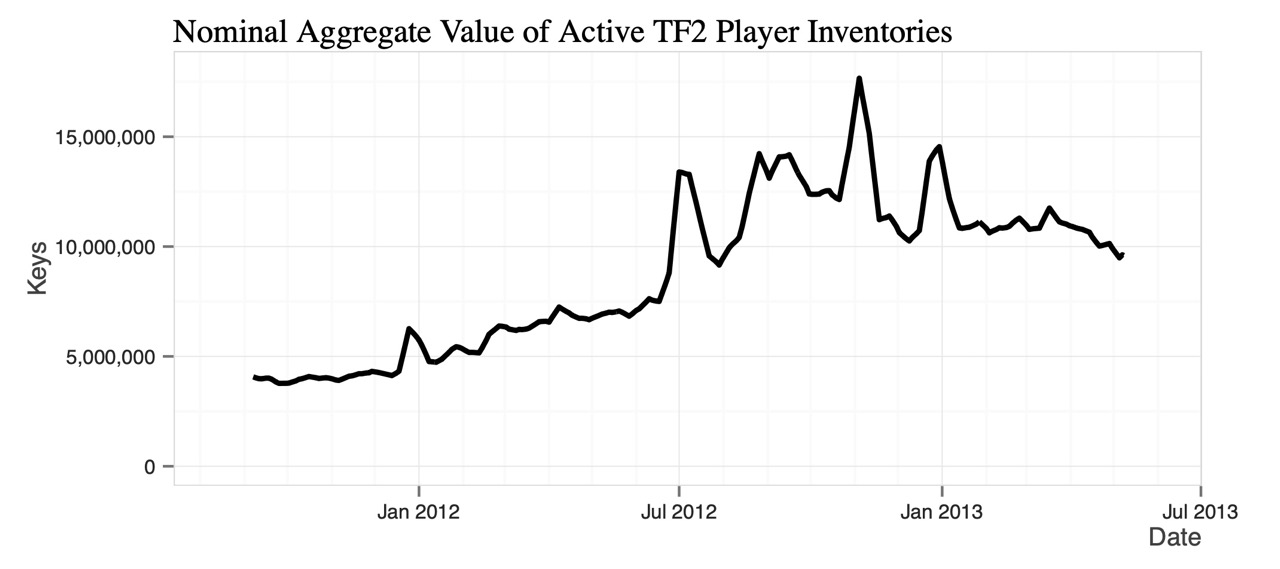
Figure 9: Nominal aggregate value of active TF2 player inventories. Note: Keys are sold on the store for $2.49 each

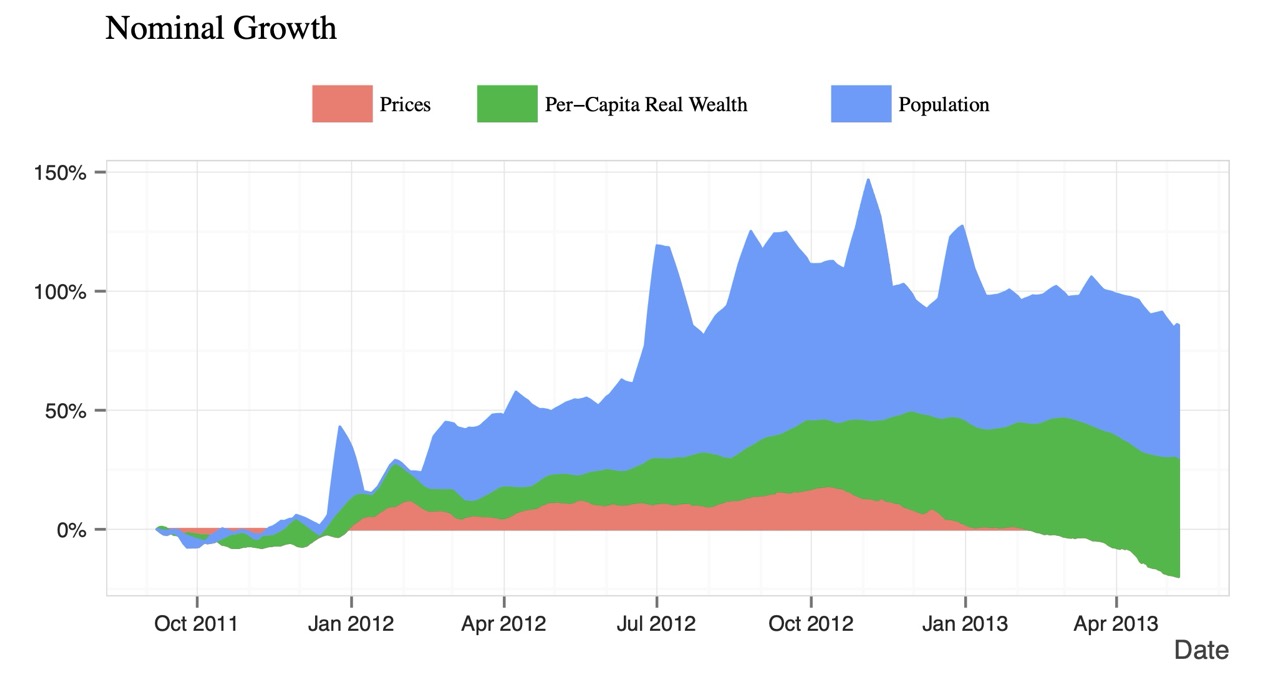
Figure 10: Growth of nominal active player wealth Note: Nominal growth since August 2011. Aggregate nominal value of active player wealth is the product of prices, population, and per-capita real inventory values. The natural log of nominal wealth is thus plotted as the stack of these logged components.