Market concentration and the responsiveness of prices and mark-ups☆
Written with David Munro
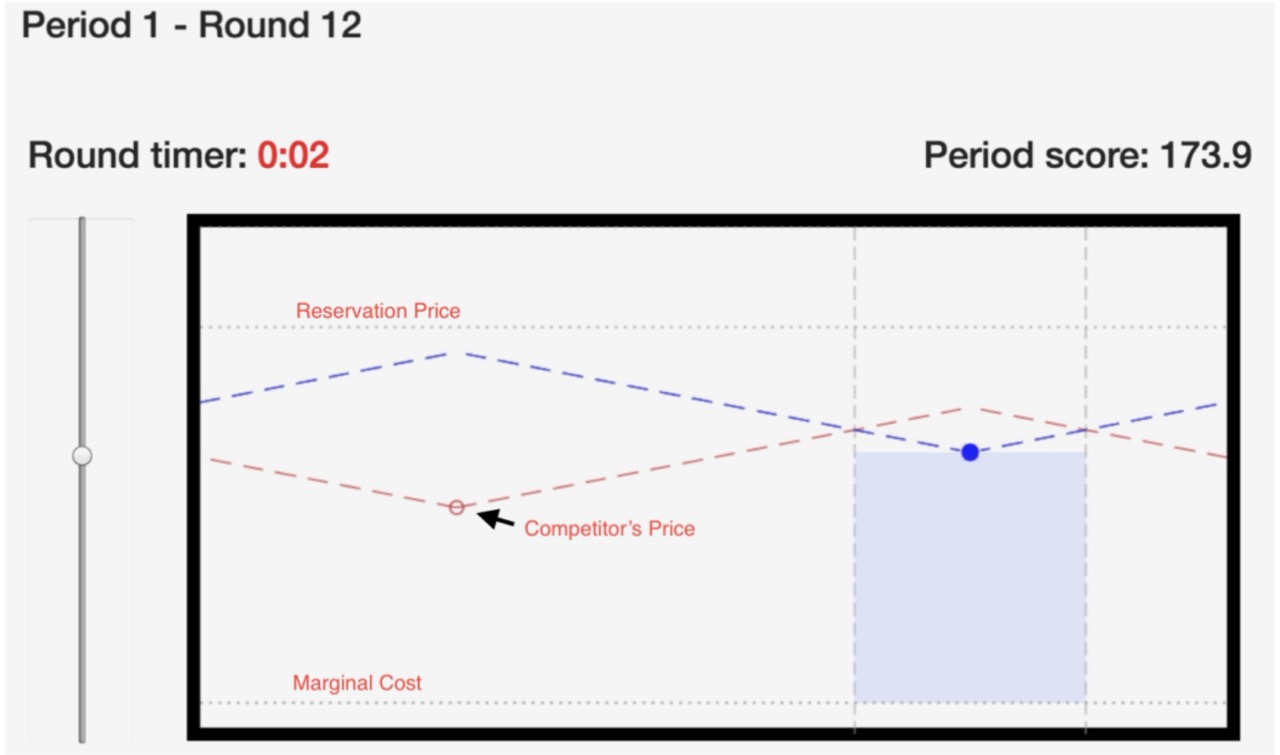
Abstract: The response of prices and mark-ups to economic shocks plays a crucial role in shaping how the economy adjusts. We explore the role that market concentration plays in determining the responsiveness of prices to different shocks. Using a model of oligopolistic competition we show that the sensitivity of prices and mark-ups depend on the type of shocks and the degree of implicit collusion formed in a market. For a given type of shock, different degrees of collusion can generate dramatically different magnitudes in the responsiveness prices and mark-ups, and in some cases even reverse the direction of the response. We test these predictions in laboratory price setting games and find that in smaller markets collusive behavior is formed more readily and this has an important impact on the response of prices and mark-ups to the different shocks.